
By Mavis Paintsil, Accra
Ghana’s youngest citizens are the poorest. A fresh Situation Analysis shows 80% of children under age 5 face multiple forms of deprivation, even as public spending on their basic needs lags global standards.
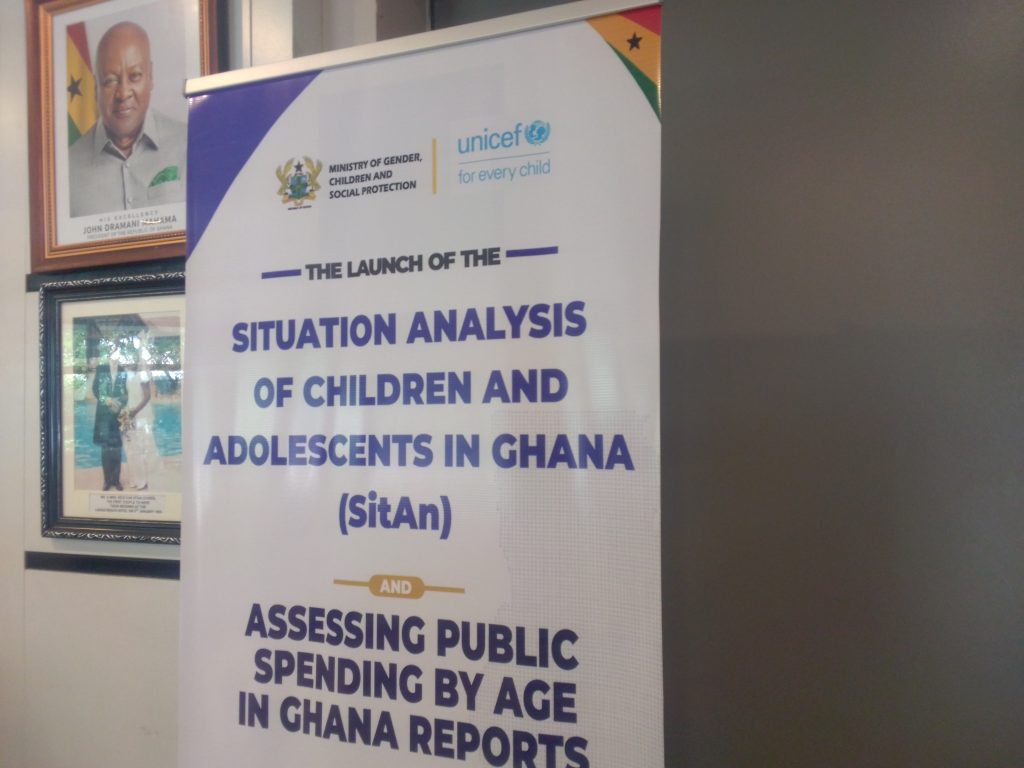
The report, produced by the National Development Planning Commission with UNICEF support, was launched last Monday in Accra to mark the 2026 Day of the African Child. The annual June 16 event honors the 1976 Soweto students’ protest and this year focused on Universal Access to Water, Sanitation and Hygiene for Every Child.
Data paints a grim picture
According to the analysis, deprivation hits hardest in a child’s first five years. Three-quarters of Ghanaian children lack adequate access across at least three key areas — nutrition, health care, early education and protection. Nearly every child, 97.5%, is missing at least one essential service.
NDPC Principal Analyst Nii Odoi Odotei said the numbers confirm what communities already feel: early childhood is where poverty is deepest. He acknowledged gains in skilled birth attendance, school enrolment and child protection laws, but stressed budget allocations for health, education and social protection remain below international benchmarks.
“Invest early, gain later”
Speakers argued that failure to fund the 0-5 age group now means higher costs later. Odotei said targeted spending on nutrition, health services, preschool education and child protection would deliver long-term economic and social returns while cutting inequality.
UNICEF Acting Representative Pauline Sarvilahti urged a “life-cycle approach” instead of siloed sector projects. She said children’s well-being must be tracked from birth through adolescence, not just in isolated programs.
WASH takes center stage
This year’s theme pushed water and sanitation as non-negotiable basics. Dignitaries including Deputy Minister Rita Naa Odoley Sowah, MoGCSP Acting Chief Director Ebenezer Charway, and VP Office Policy Advisor Miriam Iddrisu attended the Accra event.
Charway told the gathering that spending on children must be framed as national development, not charity. The analysis drew on Ghana Statistical Service data, technical input and children’s own views, making the case that breaking poverty cycles starts before age 5.
ghanaianannouncer
send invite to aba.mavis@gmail.com,or call 0505913033,0207697495
advert, sponsorship, news, graduation, wedding ceremony,call 0505913033,0207697495
Want me to adapt this for radio — 60-s
